Jonathan Schofield Manchester Tours
  • HOME
  • Calendar of tours
  • GUEST COMMENTS
  • T&Cs
  • Why I would never do free tours
  • CONTACT DETAILS AND BIOGRAPHY
  • VOUCHERS & DEALS
  • Tour Diary: Confessions of a guide
  • Manchester books by Jonathan Schofield
  • The Manchester talks series
  • Some tours in pictures
  • Saturday Walkabout Series: Music, Pubs, Ghosts
  • Bombed & Besieged: Manchester at War
  • This Mighty Manchester
  • New Year's Day tour 2026
  • Secrets of Ancoats & New Islington
  • Secrets of Didsbury
  • Sleazy & Sinister Mcr
  • Treading the boards: Manchester's theatreland
  • EXCLUSIVE: Refuge/ Kimpton Clock Tower Hotel
  • Valentine's Day tour 14 February
  • ​Chorlton tour
  • Halloween and ghost tours
  • The Tour of Uninteresting Objects
  • Whalley Range & Alexandra Park
  • Stockport Secrets
  • Knutsford Secrets
  • Secrets of the University of Manchester with interior visits
  • Suffragettes, Women & Manchester
  • Secrets of Cheadle
  • Southern Cemetery Tour
  • Truly Madly Brutal
  • Secrets of Worsley
  • Secrets of Chapel Street & Greengate Park
  • Friedrich Engels And Karl Marx Tours
  • Secrets of Strangeways & Cheetham Hill
  • Manchester Cathedral tour
  • Trees, flowers and Mcr's Green Spaces Tour
  • Secrets of Rochdale town centre
  • The Secrets of Altrincham
  • Secrets of Angel Meadow and the Irk ValleyAir, Scuttlers, Lost Churches and Hidden Stories
  • EXCLUSIVE Salford Lads Club and Middlewood Locks
  • Secrets of the Northern Quarter
  • The Surprising Manchester Series: Old Trafford
  • Lost and Imagined talk
  • The Day The World Got Smaller Tour
  • Literary Manchester: A city in words
  • The Pan-African Congress, Slavery, and Thomas Clarkson Tour: A Manchester Anniversary Tour
  • Manchester Necropolis: rattle my bones
  • EXCLUSIVE: 'Boldest Building' Tour, Edgar Wood Centre
  • Stones of Manchester
  • Spinningfields Tours - Free
  • FREE Scientists, sinners and graveyards: A Tale of Two Citie
  • Architecture & Planning: why does Manchester look like it does?
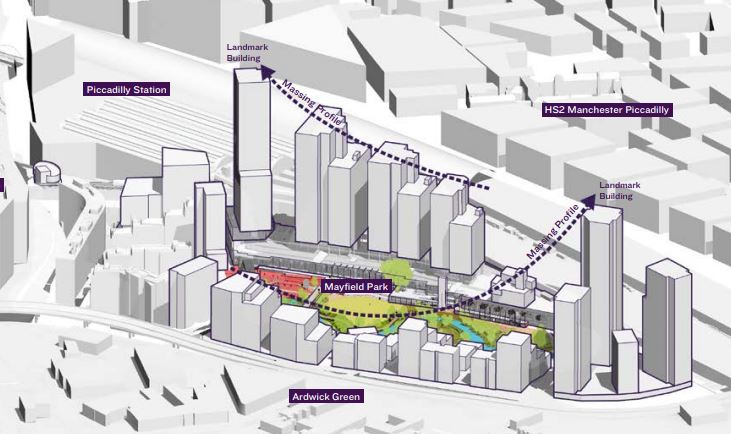
  • EXCLUSIVE: Mayfield Station tours
  • EXCLUSIVE: Ordsall Hall and Manchester Ship Canal tour
  • Secrets of Littleborough
  • April Fool's Day Tour - The Incredibly Serious Tour
  • Secrets of Fairfield Moravian Settlement
  • The Death & Beer Tour 2022
  • Secret Tunnels Tour
  • Magical Manchester Mystery Tour - by bike
  • Peterloo Massacre: The Reality & The Drama
  • Castlefield, St Johns, First Street
  • The Secrets of Middleton
  • Talk: Lost Buildings of Manchester & Salford
  • Platt Fields, Birch Fields and Rusholme Tour
  • Some tours
  • The Zoom Tours series
  • Loyalty card/scheme
  • First Wednesday Spinningfields Series 2020
  • Exclusive: 35 King St & Georgian Manchester
  • Some Published Articles On Manchester's Present, its Heritage and Tourism
  • The Rollicking Pub Tour
  • The Surprising Manchester Series: Bradford & Clayton
  • EXCLUSIVE: Kampus tours, the abandoned warehouses
  • Incredible Interiors
  • Shock, Surprise, Prose & Verse: Manchester and Literature
  • Ford Madox Brown and Pre-Raphaelite Manchester
  • Podcasts
  • Secrets of Wilmslow 2025
  • Lost Graveyards and the Dead
  • Return to 1421: The Old Towne and Medieval Manchester
  • EXCLUSIVE TOUR: New Century Tour, perfection in design from 1963
  • Suggested Private Tours
  • Anthony Burgess and Literary Manchester Tour
  • Great Northern Tunnel Tour
  • 1840s Manchester: The Key Decade, talk and tour
  • Burns Night Tour Monday 25 January
  • Fire Station Tours: Calling Photographers & Sketchers
  • Manchester City of Art Tour
  • The Gallery
  • The Ghosts of Afflecks & the Northern Quarter
  • New Manchester Squares Tour
  • The Manchester Guardian is 200 tour
  • The Understanding Architecture Series
  • FREE The Hidden Rivers Tour
  • Heaton Hall and Park Tour
  • Oasis & Mcr Tour
  • Death, Beauty & Beer Tour of Brooklands and Sale
  • EXCLUSIVE: Chetham's Library and College House
  • Liverpool - in two parts
  • FREE - ​Ballads, battles and big ideas: Embankment, Salford
  • EXCLUSIVE Hallé St Peter’s & Ancoats Tour NEW
  • The Prestwich Tour: The surprising Manchester series
  • The Secrets of Gorton Monastery
  • The First Street tour – People, Music, Arts, Mills

The Christmas Blitz 1940 and the Polish poet

23/12/2025

0 Comments

 
Picture
The raiders came at night and my father watched Manchester burn.

He was a young lad and his dad had taken him up to Healey Stones in Rochdale, 800 feet above sea level, from where they saw the city being consumed twelve miles to the south west.

With a faraway look in his eyes, as he fought for the memories, my dad recalled: “There was an angry glow over the city and you could see the sudden flashes of high explosive detonations. I think there was cloud cover and the scene played out between the city and the clouds with the clouds reflecting the glow. There were searchlights sweeping the sky. The odd thing was that it was happening in silence, the distance prevented any of the noise reaching us I suppose. All we could hear was the moorland wind. It felt unreal, like a film or some sort of moving tableau. I was boy and it was sort of mesmerising.”

He paused before adding: "Well, there was one noise. I remember my father cursing the Germans."

This was during Manchester’s Christmas blitz of 1940.

On 22/23 December 121 aircraft of Luftflotte 2, and 149 aircraft of Luftflotte 3, both based in northern France, dropped 272 tons of high explosive and 1,032 canisters of incendiary bombs on Greater Manchester. On 23/24 December 171 aircraft of Luftflotte 3 dropped another 195 tons of high explosive and 893 incendiaries.

At least 684 people died (other sources put the figure closer to a thousand) and many more were injured. Over thirty acres of city centre Manchester were destroyed (some reports say ninety). Salford and Stretford were ravaged. At one point there were 1,300 major blazes, some combining, as at Piccadilly, to create a fire storm. Buildings were demolished to prevent the fire spreading.

It might have felt unreal to a child on the moors but it was very real elsewhere. Here are a couple of examples.

On a tour I did a decade or so ago one guest recalled how her mother had grown up in Newton Heath in a large and happy family home of five adults and children. One of the high explosive bombs on the 23 December killed the whole family apart from her mum.

On the same night a single land mine blasted away homes in Stanley Road, Old Trafford, killing thirty people. Ten people died at number 28 Stanley Road. This was the home of Patrick McLaughlin, aged 45, his 43-year-old wife Mary, and her four children Catherine, 19, William, 18, Patricia, 16, and James, who was seven years old. They died along with another family who were visiting them, George Laybourne, 51, his wife Jane, 50, and their children Catherine, 16, and George, 15. Naming them makes them more real, gives them individuality.

Picture
Cannon Street in the city centre
As was the case after the 1996 IRA bomb, people were stoical not panicky. Following the first night of bombing most people still came into the city centre to work.

One witness Frank Walsh recalled: "I was sent out to deliver a parcel to a small printers situated in the warren of side streets just behind John Ryland’s Library on Deansgate. I started out making my way down Canon Street which was strewn with debris, broken glass and fire hoses, with fire tenders still spraying water on the burning and smouldering shells of buildings. Several side streets were wrecked and impassable where some of the buildings had been roped off. Large coping stones from the tops of building were lying everywhere.

"My route was often changed and I had to make many diversions as my journey progressed very slowly because of stopping to talk to firemen and other groups of pedestrians standing outside of what used to be their place of employment, now completely demolished. The smell of burning was intense. Buildings were collapsing all around and still on fire. Those that were not on fire were left as piles of smoking and smouldering rubble."

Picture
The magnificent but ruined Assize Courts
The city lost major monuments.

The biggest loss across all the various war time raids was the Assize Courts at Strangeways, an 1864 masterpiece by Alfred Waterhouse, architect of Manchester Town Hall.
The Market Square area, a reminder of the city’s small town past, was flattened. Presently occupied by Harvey Nichols, Selfridges and Marks and Spencer, this contained a tangle of Georgian, Victorian and earlier buildings built on a low scale, which was unlike any other central area. I imagine today it would have been filled with interesting little retailers, with a York-like atmosphere, maybe a couple of cracking restaurants.

Other buildings lost or severely damaged included the Cathedral, the Free Trade Hall, Victoria Buildings, Cross Street Chapel, the Royal Exchange, and Smithfield Market.
Picture
Victoria Buildings with the Cathedral behind which was also badly damaged
The famous ‘Blitz spirit’ was captured by one the finest poets to have graced Manchester and who lies in Southern Cemetery.

She wasn’t Mancunian, she wasn’t even British and her homeland, Poland, would suffer immeasurably more than these islands.
​

This was Maria Pawlikowska-Jasnorzewska. She was born in Cracow in 1891 and became known for her sensual poetry and plays. These often courted controversy. Her graphic art was good too, almost William Blake-esque (see below). She was born into a family of artists with a circle of friends that included painters, writers and intellectuals. A fiercely passionate woman her work explores love, lust and politics. She was married three times.

Any men reading this might try to measure themselves against Pawlikowska-Jasnorzewska’s challenge in the poem Whoever wants me to love him.
​

Two years before World War II she wrote a play A Woman of Wonder which was virulently anti-Nazi and mocked a Hitler-like dictator. When the Germans invaded it was inevitable she would have to flee the country. With her third husband Stefan Jasnorzewski she settled in the North West of England. Stefan fought in the Battle of Britain as an RAF pilot and had a distinguished war career.
Picture
Main picture and here: Maria Pawlikowska-Jasnorzewska
British stoicism for Pawlikowska-Jasnorzewska was summed up by a cup of tea. This sounds like a cliché but these two translated poems are anything but clichéd. The first refers to the merciless history of her homeland the second is a tribute to human courage.

To the bombed, the homeless, the wounded... 

Who will weep for you? Not John and not Mary.
Neither Percy nor William. Not Gladys - nor Sybil
Hardened by the cold and tough as the seagulls.
But a sad woman from Krakow will. She was born next to Wawel castle,
In a country where we were taught to cry our eyes out by the birches,
By the robins in the park, by Chopin, by black cherries.
From a land with a culture of tears, a land of melancholy...
I raise a toast to you with a cup of tea,
I serve you with my grief– my country’s natural resource.

The Wartime Niobe
Alice, the Manchester Niobe, lost her
Entire family, survives alone amidst the rubble
Confused - as the Earth herself would be confused,
Confused and astonished, fazed and hapless,
To see the sudden absence of the sun, moon, planets
Swept from the sky by one brief and horrific tremor...
But this Niobe is no model for sculptors
Because as she strains not to upset or frighten the others
She holds back her gesture of despair and tries to smile,
And she rubs at her face with all her might
To hide the emotion betrayed by her pallor,
And from the hands of her nice friendly neighbours, in silence,
She accepts a cup of merciful tea... 

Niobe in Greek mythology is the woman whose children were killed by the Gods and became a symbol of solitude and loss.


Maria didn’t long survive the war. She died of cancer in Manchester after several years of illness and was buried here. That was in July 1945, two months after the war in Europe was over. Despite all the hell Poland had gone through Maria's country remained repressed, rule transferring from Berlin to Moscow. Realpolitik underpinned this betrayal by the West of an ally.
Picture
Maria Pawlikowska-Jasnorzewska might not be well known in Manchester but she’s remembered in Poland.

Agnieszka Cybulska who lives in the city told me: “In Poland she is considered to be one of the most iconic poets of the interwar period, whose works (such as the poems Love, Nike, Ophelia, The Old Woman, Time, the Lame Tailor) often appear in Polish literature classes in secondary schools. Although there is no single mandatory text on school reading lists, her lyric, poetry and dramas (e.g. “Baba-Dziwo”) are discussed in the context of interwar literature, with analysis focusing on her distinctive style and recurring motifs.

“Perhaps she would have been even more famous in her home country if she had stayed in Poland although with the Nazis and then the Communists in power that may have been impossible in terms of creative freedom or worse. It is widely known she died outside Poland but I do not think too many people know she is buried in Manchester. I didn't.”

Maria and her husband now have a fine stone in Southern Cemetery erected by the Union of Polish Writers and the UK Polish community. Her poems remain a poignant memory of the events of December 1940 in Manchester when there was a 'sudden absence of the sun, moon, planet, swept from the sky by one brief and horrific tremor...'. They are a tribute to the way ordinary people faced extraordinary circumstances.

You can read more about this remarkable women here.

I'll be talking about the blitz and Maria Pawlikowska-Jasnorzewska on the Bombed and Besieged tours this year at 11am Sunday 18 January, 6pm Thursday 19 March (this finishes in a pub) and 10.30am Saturday 12 December. You can book here.

I also be talking about her on my Southern Cemetery tour on 10am Saturday 4 April 2026, 10am Saturday 5 September 2026. You can book here.
Picture
0 Comments

Manchester Town Hall delayed again but let’s celebrate the bit we can see now, the tower and spire. We nearly didn’t get it.

8/12/2025

0 Comments

 
Picture
                                    Budget bashing

Recently the city council announced Manchester Town Hall’s refurbishment won’t be completed until spring 2027.

The council said: 'The project completion has now been set for spring 2027. This is later than the previous estimated date, but with more certainty. To overcome the final obstacles, a budget increase of £95 million will be required, taking the overall project budget to £524.8 million. As well as existing costs, the increased budget includes a substantial to contingency to support a spring 2027 completion.' 

In other words the refurbishment will have taken as long as the initial build time from 1868 to 1877. By way of excuse the council said: '(The) Town Hall is the largest and most complex heritage project undertaken in living memory anywhere in the UK.'
The jump from £330m to £524.8m is huge although it should be remembered that the budget for Manchester Town Hall in the 1860s was over £400,000 but the final account was around £1m. So, proportionally larger.

The mayor at the time, Abel Heywood, made no apology for the doubling of the budget.

'We cleared a vast area, and Mr Waterhouse’s beautiful design rose, stone on stone and pillar on pillar. We spared no expense. Every detail we desired to have perfect. To have been parsimonious, to have neglected corners or recesses which were obscure, to have allowed ornamentation which was tawdry, would have been for ever to brand Manchester as a city given up to no higher thought than the quickest accumulation of wealth.'

So while we have to wait a little longer to see the whole building we can however gaze fondly at Manchester Town Hall tower. 

The Gothic flamboyance of the 288ft tower is, in a city with a developing skyline, the lodestone, the solid bond between Victorian past and uncertain present.

But we're lucky to have it. And the one we nearly got was terrible.

The architect of both towers, the actual one and the proposed one, was Alfred Waterhouse. He's renowned for many city and UK buildings – the University, Strangeways Prison and the Natural History Museum in London.

Waterhouse was largely unknown in the city where he made his reputation until pub chain Wetherspoons came along and named a boozer on Princess Street after him. This is amusing because, as a Quaker, Waterhouse didn’t touch the demon drink
.
Picture
Waterhouse's original design
                     St Valentine gets the tower wrong

Waterhouse seems to have entered the 1867 competition to design Manchester Town Hall late and in a rush. Entries had to be anonymous. Waterhouse monikered his design St Valentine as that was the date in 1868 when a winner would be announced.

The hasty nature of his design explains why in terms of looks it came fourth. But in its practical use of the awkward triangular site and its internal arrangement it won hands down. Ever practical, the Victorian mindset dictated the most useful not the most fanciful design should be chosen.

The big problem with Waterhouse's proposal was the whole arrangement of the tower, spire and entrance. The judges did the equivalent of tapping their finger on the drawings and saying, “Alfie, boy, that’s no good, you’ll have to change it.”

Look at our picture in the attachments: that strange dome thing on the top is a weedy weak thing, as though Waterhouse had scribbled it in 15 minutes before the deadline.

So he drew it again and produced a proper pointy spire. Then he reduced the heaviness of the spire by drawing it as a filigree of delicate stone tracery. Still unhappy with this latest solution he finally redrew it with the spire we see today, punched with four leaf 'quatrefoil' holes.

But something kept nagging at him and six years into construction as the Town Hall neared completion, he suspended work. He called the building committee together and explained that the proportions were still wrong and the tower needed to be 16ft higher. The committee agreed despite the added cost.

The entrance to the tower and the building was annoying him too. We can’t see this until the 2027 reveal but he finally settled on a large openwork screen over the entrance which made the latter look bigger and more in proportion with the tower above. It also cleverly reflected the shape in plan of the Town Hall and was capped off with a sculpture of the Roman general Agricola who founded Manchester. Thus the entrance to the Town Hall marks the origin (the entrance into history) of the city. Neat.
Picture
The second attempt
Picture
The finished article
                               Climbing the tower

I have in the past taken people up to the top of the tower. Apparently the city council are going to start tours again when the building refurbishment is complete. They should.

On the trip there are many joys. A highlight is the room where the original clock mechanism resides. This is a phantasmagoria of immense brass wheels with clunky levers and gears clicking and whirring. Higher again is the chamber behind the clock faces, with the 6ft hour and 9ft minute hands silhouetted against the sky. There was an excellent BBC programme earlier this year about the restoration of the clock.

From the balcony the views north, south, east and west are superb. Despite all the fancy detail, the gargoyles, the curlicues and finials, there's no more solid space in Manchester. This was one of the key qualities of Alfred Waterhouse. He was the master of the robust. He could do fancy when required but his talent lay in solidity, making buildings that feel as though they will never fall down. When you’re 200ft up, that’s a valuable and comforting quality.

Stand in Albert Square and if you have eagle eyes or a pair of binoculars you might see golden words high on the town hall. On three sides of the protruding gables above the clocks there are two words. Put these together and they read, 'Teach Us To Number Our Days', a Biblical quote advising us to make the most of our lives. Carpe diem and all that.

The main lantern chamber holds Great Abel, the hour bell of Manchester Town Hall, which is bigger than a generous three-man tent and is named after the mayor quoted above – Abel Heywood. Cast round the top are lines from Alfred Lord Tennyson’s poem ‘In Memoriam’. They read ‘Ring out the false, ring in the true.'

A worthy sentiment but one to make a writer’s eyes water.

                  A cheeky moment or two or three

For a while in about 2015 I had a key to a little door on the third floor of the Town Hall. This led to the fabulously moody spiral staircase up the tower. I was supposed to use this key solely to provide access when taking in groups. I cheated.

On lovely days I would tell security I wanted to check some element of the tower or the clock mechanism or the bells. I would then climb to the balcony high above the city, find a convenient perch, dig out a book from my bag and spend a happy hour reading. I might have even taken some refreshment with me. Up to you to guess the nature of that refreshment.  

Picture
The view from the top over a previous Christmas market
Picture
0 Comments

De Niro, Mcr's Christopher Wren, Leaf Blowers, The Mill gets it very wrong

15/11/2025

1 Comment

 
Picture
Big tower, big star

Tuesday 11 November and in Albion Street’s packed railway arches developer Salboy unveiled a monumental model of their proposed 246-metre “landmark’” tower. This hardly needed the repeated vocalisation of “landmark” as it will inevitably be so, it’s bloody massive.

Viadux Two, aka Nobu Tower, will sit between the tramlines over from the Briton’s Protection pub and the already completed Viadux One which is a neighbour of Beetham Tower. It will be 806 feet high in old money, whereas the current lanky lad in Manchester is South Tower at Deansgate Square at 201m or 659ft. I’m a sucker for an architectural model. The model for Viadux Two, aka Nobu Tower, is a stunner, probably 11ft high and meticulously and gleefully detailed.

The launch party and the model attracted lots of attention but most people had come for something else. They’d come to grab a sprinkling of fairy dust. They wanted to bask in the presence of a real Hollywood celebrity. Oscar-winning Robert De Niro was in town along with two other co-founders of Nobu.

Nobu will bring a very high end restaurant on the ground floor and a hotel and 'residences' higher up – literally high end. The residences will live up to the overused estate agent epithet of ‘luxury’ for once.

The media were in a frenzy as you might have noticed from the local and national coverage. Meanwhile De Niro was honest about how little he knew about Manchester. In a short speech he threw in some nice platitudes about the city having “real character” and seemed “creative, passionate, strong,” but that was it. The 82-year-old finished with: “I look forward to coming back when (Nobu Tower) is finished, if not before. I plan to be around. It’s gonna take six years. I'm gonna MAKE sure I'm around.” The last sentence carried an echo of the “You talking to me?” scene in Scorsese’s Taxi Driver.

I’m currently writing a full article on the event, Nobu and the architecture to be published next week.

​
Picture
Christopher Wren of Manchester?

The architectural practice behind the tower is SimpsonHaugh. Is there another city anywhere where one firm dominates the skyline as completely as this lot? All the towers at this end of the city, save two or three short arses, are from the practice. Surely the last time this happened was in London with Christopher Wren’s church spires and towers three hundred years ago. At the Nobu launch I asked Ian Simpson whether he was the 21st century Manc Wren. He laughed and said: “I’d prefer Waterhouse.” Alfred Waterhouse was the architect of Manchester Town Hall, the University, part of the Kimpton Clock Tower Hotel (Refuge Assurance) and so many other Manchester buildings. Perhaps Simpson will get a Wetherspoons named after him, just like Waterhouse on Princess Street.

Sunlight House gets an expensive polish


There was a very lively launch event at Sunlight House a couple of weeks ago with GM Mayor Andy Burnham present. The Art Deco classic has been refurbished at a price of £35m by French company Karrev. The 1932 building is named after Joe Sunlight, the maverick Russian Jewish émigré, who designed and owned the building. The most impressive internal feature is the huge light well that falls away seemingly for miles. Current tenants include The Crown Prosecution Service. The swimming pool which was there from the beginning is now unfortunately dry but will remain as recreational space. At the event it was sweet the very fine historian and genealogist, Michala Hulme, had discovered a great niece of Joe Sunlight, Marion Panayi. This lovely elderly lady was at the launch for a walk down memory lane. I wrote about Sunlight House and Joe here in a piece about a tower that was proposed and never built and then a new tower which has once again failed to materialise.

Myth-busting: Sunlight House wasn’t the first Manchester skyscraper


Every article and book says Sunlight House was Manchester’s first skyscraper and the tallest building in the city centre when it opened in 1932 with its 14 floors rising to 41m (135ft). This is odd because clearly it wasn’t. Ship Canal House opened in 1927 and is 46m (151ft). Manchester Town Hall opened in 1877 and its tower is 85m (280ft). It’s curious how a story gets repeated and then becomes the truth.

Picture
Picture
Heavenly drinking den opens
Here’s good news for spirit aficionados. Elysium is now welcoming customers on Princess Street with its superb collection of more than 300 whiskies (and whiskeys). There are also cocktails, wines and a whisky tasting room. For reference, Elysium sits between Rozafa Greek Restaurant, and the Waterhouse, Wetherspoons Pub on Princess Street. The operator and owner, Alan and Mark, previously at the Britons Protection have created the place from nothing, it was formerly a job recruitment office. Entertaining if not gainful employment can be had propping up the bar.


Picture
Chorlton food scene on the up

The Horse and Jockey Pub in Chorlton has been revitalized under the management of Neil Burke and Ben Chaplin of The Black Friar, Salford. It’s the first Joseph Holt pub to be managed by another company. It is quite exceptional. The up-to-date food features lots of British classics with the occasional Mediterranean flourish from talented head chef Paolo Bianchi whose career included a spell with Alain Ducasse at the Eiffel Tower. The Horse and Jockey is immediately providing the best food of its type in a Manchester suburb. Chorlton’s got lucky. The proof of the pudding, if you forgive the pun, is it’s amazing popularity. The place has been packed most nights and has a lovely olde worlde low ceilinged atmosphere complete with real fires. It's in a fine location on Chorlton Green too. Have a gander at the menu here.

Piccadilly symbiosis


I interviewed Manchester Council Leader, Bev Craig
, about the proposed Piccadilly Gardens improvements recently. Strolling around the area and talking to some of the habitués can be depressing but there are some grim moments of humour. One shop on Piccadilly is called Smokers Paradise. It’s neighbour is the British Heart Foundation charity shop (see pic below). Not sure if one leads to another.

Picture
Leaf blowers and the Swiss

I was doing a tour with some Swiss people last week. One of the young women asked about the electoral system in the UK. I said we had national and local government elections and she said “But what about other issues? What about referendums?” I suggested we don’t do those very well. “We have lots of referendums,” she said. They really do.
Turns out the Swiss have February referendums and September referendums. This seems excessive. In September there was a nationwide referendum about whether there should be electronic identity cards, a big debate in Britain too, of course. The majority was tiny which may sound familiar, 50.4% for and 49.6% against. Are such tiny majorities justification for changing the direction of national policy? I don’t think so.
In September in Zurich there was another referendum. This was to ban leaf blowers on the grounds of noise and pollution. “There was a big majority in favour,” said the young woman on the tour. They have whopping problems those Swiss, eh?
While describing the Suffragette movement and Manchester the Swiss reminded me that women in Switzerland didn’t get the vote until 1971. In one canton, Appenzell Innerhoden it was as late as 1990. The only people voting in those referendums were men of course.

The best sculpture in the city centre?

For me this is Charles Jagger’s Sentry in Watts Warehouse, now the Britannia Hotel. In this Remembrance Week I think it’s worth reminding people about it, maybe go down and take a look. Don’t stay in the hotel though. It’s rubbish. You can read my description of the work here.

The Mill and the BBC familiarisation trips

If you have any public profile in Manchester you’ll find yourself featured in The Mill at some point as did I with their story some weeks back about guiding in Manchester.
This intro to last week’s feature about the BBC moving to MediaCity was irritating though.
‘In autumn of 2008, a fat coach full of London media moguls squeezed its way down Lapwing Lane, West Didsbury. Through scratched plexiglass they saw the sights: the deli, the candle shop, the solicitor and the skin doctor. They drove through Whalley Range to see Victorian villas. They bent heavily round the M60. “I realised they wanted to show [us] places that looked like Clapham, or Wimbledon,” one passenger now recalls (the “us” was initially “all these spoilt gentrified people from London,” but I’ve edited the quote to make it kinder). “I can’t remember if we went to North Manchester or not,” he says. “We might have gone to Prestwich.”’

The truth about the BBC familiarisations

It didn't happen like that in the slightest. I was the tour guide and trip organiser for the visits. What we usually did was drive through Castlefield, Whalley Range, Chorlton, the Didsburys, then through Altrincham and Sale and up to Ramsbottom. I wanted to show the guests a proper Pennine town.
We returned down the east side, through those well-known glam spots of Clayton and Beswick, past Manchester City FC and then back into the city centre. So, of course, since the aim was to get people to relocate we went through the ‘nice’ places but there was no shirking from other areas and I promise the commentary was, as agreed with the BBC, ‘warts and all’.
The guests weren't media moguls. Anything but. They were from all levels of the BBC from office admin staff to presenters and producers. None of them were ‘media moguls’. As for the ‘fat coach’ it was normal size and hadn’t put on any weight. The writer, Ophira Gottlieb, could have just asked me about this but for reasons unknown didn’t.
The Mill does a lot of good stuff but two points. I wish they wouldn’t keep telling us how good they are. It seems pathetic, like a kid seeking approval. Also they shouldn’t lead with unattributed quotes as a hook for articles and then use them freely within the articles. That’s naughty journalism.

Stockport welcome

During a recent tour of Stockport I stopped outside a very nondescript building in a car park opposite The Arden Arms to talk about the fabulous eighteenth century Elizabeth Raffald. I was halfway through my spiel, fascinating naturally, when through the walls of this nondescript building a voice shouted, “Will you shut the f*** up!” It was 10.30 in the morning so not particularly early. The whole group started laughing and one local guest said: “Welcome to Stockport.”


Books for Christmas? Check out some of my titles here.
1 Comment

Manchester's best city centre sculpture? I think so

14/11/2025

0 Comments

 
Picture
THERE's only one place I go in central Manchester to brood on World War One. I go to the tired and faded Britannia Hotel and look a determined Tommy in the eye.
In the lofty foyer of this former textile warehouse is Charles Jagger’s unforgettable Manchester Sentry.

None of the other city war memorials have work that approaches Jagger's in its power, feeling and accomplishment

Our warrior is defiant and watchful but weary too, exuding from all his metallic pores and all the metallic folds and lines of his great coat, ‘the pity of War’, as poet Wilfred Owen, an officer in the Manchester Regiment described it.
​
There is no better work in the city to individualise the conflict and put a face to the ghastly statistics of death as the European powers threw their men onto the guns and the wire. British and Commonwealth forces lost just shy of a million dead with over two million wounded. 

Picture
Wilfred Owen was perhaps the best known of the war poets. He died just before Armistice Day in 1918. His mother opened the telegram informing the family of his death as church bells were ringing to announce the end of the war. You can see Wilfred Owen’s name in the Books of Remembrance in the Regimental Chapel in Manchester Cathedral. 

Owen's words about the 'pity of War' refer to his desire to reveal through his poetry the tragedy of war, its reality, the blood and mud rather than vague notions of glory and honour, abstract nouns far removed from the actual slaughter.
​
The sculptor of the Manchester Sentry likewise wanted to keep it real. Charles Sargeant Jagger, originally from Rotherham, had served in the war and had been wounded. He knew the war from the inside.
Picture
He wanted his sculptures to be the opposite of derring-do idealism and show something of the grit of the fighting man and life in the trenches. His species of 'realism' was at odds with the mood of the day, when all the most progressive artists were adopting the various schools of Modernism.

At the same time Jagger's realism was far removed from the melodrama and sentimentality of much art before 1914. 

The Manchester Sentry was commissioned by the Watts family for their textile heaquarters in Manchester to mark the sacrifice of several hundred of their staff.

The statue was erected in 1921. After surviving the 1940 blitz that destroyed so many buildings around the Piccadilly area, it was vandalised sometime in the noughties when the bayonet mounted on the rifle was stolen. No doubt it was a drunken prank in a hotel group with the worst reputation in the UK and one that promotes cheap drinks, but it damaged the balance of the artwork.

We have to be thankful, back in the 1980s after the Portland Street building had closed as a warehouse, that the Britannia group rescued it through conversion to a hotel. Thirty years on the goodwill is exhausted. Given the hotel group's lack of respect for the city it's perhaps too much to expect them to respect Jagger's Manchester Sentry and replace his bayonet.
Picture
There are a number of company war memorials in Manchester buildings including a large one at Victoria Station. This features the devil, in otherwords German militarism, being slain by St Michael, in otherwords the democratic countries, but none of the other city war memorials have work that approaches Jagger's in its power, feeling and accomplishment. 

My great-uncle Tom Hodgson was a member of the regular army at the start of the war. He embarked in August 1914 with 80,000 others for Belgium and France. He didn't last the month, killed at the Battle of Mons. I think of him, now a century dead, when I pause by Jagger's Manchester Sentry.
 I try to give a nod to all the war dead. ​

One of my favourite passages from a WW1 autobiography
World War One is not just fascinating for personal reasons. The static nature of the war in western Europe, to-ing and fro-ing over a few miles of terrain, with heavily industrialised nations, blasting millions of tons of hot metal over man, beast and landscape, is gripping, hellish.
Wilfred Owen's friend Siegfried Sassoon, another poet, in his Memoirs of an Infantry Office, captured the scale and pity of the war in his description of a battalion returning to a camp behind the lines after being at the front in the Battle of the Somme in 1916. It's magical prose.
‘An hour before dawn the road was still an empty picture of moonlight. The distant gunfire had crashed and rumbled all night, muffled and terrific with immense flashes, like waves of some tumult of water rolling along the horizon.
'Now there came an interval of silence in which I heard a horse neigh, shrill and scared and lonely. Then the procession of the returning troops began. The campfires were burning low when the grinding jolting column lumbered back. The field guns came first, with nodding men sitting stiffly on weary horses, followed by wagons and limbers and field kitchens. After this rumble of wheels came the infantry, shambling, limping, straggling and out of step. If anyone spoke it was only a muttered word, and the mounted offices rode as if asleep. The men had carried their emergency water in petrol cans against which bayonets made a hollow clink; except for the shuffling feet this was the only sound.
'Thus, with almost spectral appearance, the lurching brown figures flitted past with slung rifles and heads bent forward under basin helmets. Moonlight and dawn began to mingle, and I could see the barley swaying indolently against the sky. A train groaned along the riverside sending up a cloud of whitish fiery smoke against the gloom of the trees
‘Soon (the troops) had dispersed and settled down on the hillside, and were asleep in the daylight which made everything seem ordinary. None the less I had seen something that night which overawed me. It was all in the day’s work – an exhausted division returning from the Somme offensive – but for me it was as though I had watched an army of ghosts. It was as though I had seen the war as it might be envisioned by the mind of some epic poet a hundred year’s sense.’

The hundred years have been passed now. Jagger’s superb evocation of that war now stands guard over stag parties and hen parties in the Britannia Hotel

0 Comments

'UK's most horrifying sculpture?': Man on Fire, Imperial War Museum North

5/11/2025

0 Comments

 
Picture
I took a group of MSc young people from Henley Business School around this week. On the second day we did a tour of The Quays. At the Imperial War Museum North I showed them this work. It impressed them mightily. The Masters students were enthralled and horrified by its raw power. This is my review of it from a couple of years ago. It still has the power to shock. 

What: Man on Fire, a sculpture installed on Friday 7 July, 2023.

Permanent or Temporary: Permanent

Where: Imperial War Museum North (IWMN), outside in the compound, adjacent to and visible from Trafford Wharf Road.
​
Who: The sculptor is Tim Shaw (pictured below) who was born in Belfast in 1964, went to college at Manchester Polytechnic and Falmouth University and has a studio in Cornwall. The word controversial doesn’t cover the hard and direct rhetoric of his work. 

In the early noughties for the Eden Project, one of his sculptures, Silenus, a Greek deity of music, debauchery and drunkenness, was held back for fear of upsetting people. It did. When first on display in London, the sculpture was attacked by a man with an iron bar shouting "You're worshiping the wrong God!”

The sculpture certainly had presence. It was three metres high ‘naked, portly, and proudly erect’. Shaw’s main artistic theme, though, is conflict as this IWMN work, Man on Fire, emphasises. 
Picture
What IWMN says: Monumental in scale, Man on Fire captures the dreadful moments of a person on fire, caught between life and death. Primarily based on images of the 2005 Basra riots during the Iraq War, it was also inspired by photographs of the 2007 Glasgow airport attack and by Shaw’s own memories of growing up during The Troubles in Northern Ireland.
​

What Shaw says: Although this work was originally shaped by photographs of a soldier diving for his life from a burning armoured vehicle, Man on Fire bears witness to the universal horror of war. War is time old, and conflict does not discriminate between gender, age or country. Russia’s brutal invasion of Ukraine testifies to the fact that we continually repeat the same tragic mistakes.
Picture
Opinion: This is one of the most powerful sculptures you might ever see. It is absolutely horrifying. It will remain in your mind’s eye long after you’ve walked away.

The almost five-metre work is a permanent shadow even in sunshine, a dark throb of pain outside IWMN. The material used is oily black-rendered bronze with the appearance of recently melted rubber. In wet weather the sculpture carries the sickly sheen of hot tar. At the rear, embeded in the work is a tyre, which makes you shudder and recall ‘necklacing’ in South Africa.

The main figure is of a man, running, swathed in black fire, flames forced behind as he bends forward in agony, his skin being stripped from his body by the heat. You can't help yourself but bend to look at his face. This excites even more horror. The eyes are bulging, lips peeled back, tongue obscenely exposed, in a desperate wrenching silent scream. You might want to look away immediately.
Picture
We live in an age where apparently harmless novels, plays and films are given trigger warnings so our sensitive selves won’t be offended by their content. The same thing happens in galleries. Trigger warnings usually insult our intelligence, so it’s almost surprising within this atmosphere of academic and curatorial anxiety that Man on Fire, given its graphic nature, doesn’t have a trigger warning posted 10 metres away. Heaven forfend IWMN ever posts one. 

If comparisons are sought for the work then the obvious one is Francisco Goya’s, The Disasters of War set during the Napoleanic Wars in Spain. Shaw has updated those ghastly images, turned them 3D and scaled them up. 

His skill with Man on Fire is to personalise the horrors of war, condense them into the fate of one doomed and terrified soul. These horrors are often made banal through the filter of screen, magazine or newspaper and is often played down in art exhibitions. Man on Fire shows us the heart of what war is; the violence, the pain, the death, the pure visceral hell of it.

The piece does a remarkable thing. This is a work of art that feels real, or as real as we can get without being involved inside a conflict. So much public art is meaningless tat, an afterthought, IWMN should be praised for delivering something with real punch to Greater Manchester. 
​

You might find Man on Fire disgusting, it might horrify you, you might hate it, I think in many ways I feel all these things, yet, I guarantee you, as I did, you will also find it impressive, powerful and moving.

Rating: 10/10 for the sheer power of the work.
0 Comments

Power, Pomona, Bobby, Bread

20/10/2025

3 Comments

 
Picture
Hurrah, full steam ahead – at last

My favourite bit of the Science and Industry Museum, the Power Hall (picture above), is set to reopen on Friday 17 October. There will be all manner of engines and trains. There’s something deeply poetic about the massively mechanical. To see large components working in rhythm together is mesmerising and a million miles from digital miniaturisation and the accelerating take-over of AI. Standing next to these machines is akin to being in the presence of mighty metal dinosaurs.

The director of the museum, Sally Macdonald says: “This is a hugely significant moment for our museum, the Science Museum Group and for Manchester. Power Hall symbolises the city’s innovation, creativity and resilience. Ideas that began in this city have impacted people and places across the world and shaped life as we know it.”

The Power Hall has been named after Andrew Law who supported the renovation through his personal foundation, AL Philanthropies. Money from this will go to educational programmes for STEM subjects.


Picture
Albert Square’s coded messages

As Albert Square gears up for public access on 7 November the drains have been given distinction. Five designers are going to have their work walked all over with their decorative drain covers. These were manufactured by the excellent Jon Male at Studio Jon Male in Manchester. The artists are Barney Ibbotson, Faz Barber, Olivia Clermont, Eddie Campbell and Dan Birkbeck. A good example is Ibbotson’s which highlights some of Greater Manchester’s innovations and firsts: expect references to Dalton’s atomic theory, the programmable computer, graphene, the formation of the Football League amongst several others. They won’t look shiny silver as in these design illustrations, they’ll be Cor-Ten steel, so rusty orange; tougher, easier to walk over.

Picture
A Bobby Dazzler
​

Taking some guests around OId Trafford suburb recently a guest remarked about the Bobby Charlton mural on the Old Trafford pub wall. I recalled this story from Graham Stringer (ex-council leader and presently an MP) in his Charlton obituary in Manchester Confidential.

‘I only ever met one person who was completely oblivious to Bobby’s celebrity this was Kim Yu-Sun the North Korean Member of the International Olympic Committee. He had been instructed by the North Korean Government not to make himself available to the delegations, including Manchester, bidding for the 2000 Olympic Games. Glyn Ford, then an MEP for Greater Manchester, managed to get the instruction changed and Bobby, Glyn and I took Kim for a meal in Monte Carlo. Although Kim was an international footballer himself, he had no idea that he was in the company of greatness. The conversation was stilted to non-existent, and Bobby ended up producing a pack of cards and doing card tricks. At the end Kim thanked us all for the meal and in particular for bringing the ‘magician’.’

Picture
Nomenclature madness: a hat-trick

It still bewilders me that Malmaison Deansgate Hotel (pictured above) overlooks Albert Square on Princess Street and the King Street Townhouse is on  Booth Street. For the former the Malmaison used ‘an algorithm’ to work out what was the best name for the hotel in the area. The algorithm said more people search for Deansgate than Princess Street. Tail wagging the dog eh? I’m sure if they’d put in Albert Square the result might have been different. But it shouldn’t have mattered about an algorithm; the name should have been Malmaison Albert Square or Malmaison Princess Street because that’s where the hotel is located.

Mind you it’s not just with recent names there’s a problem. The Bridgewater Hall is named after the 3rd Duke of Bridgewater who funded the Bridgewater Canal which is nowhere near the concert hall. However the latter sits above the Manchester and Salford Junction Canal and very close to the Rochdale Canal. Of course those wouldn’t have worked, they would have been confusing, especially the Rochdale Hall.
​
Tommy Ducks pub was close to the site though. This curious pub which weirdly sported donated underwear from customers on the ceiling was infamously demolished by the infamous Greenalls brewery in 1991. What about Tommy Ducks Hall? Would that have worked better? Er…no, but it would have been more relevant to the site.

Picture
Peel Group and the Pomona problem
 
Of course they’re a big company, of course they have to make money but many of us dreamt foolishly that as a legacy gift to the city region Peel Group might have turned the ‘island’ site of Pomona on the Manchester Ship Canal into a park. After all it was public money that created the canal so it would have been appropriate if Peel Group could have followed the example of so many regional bigwigs in the nineteenth century and given citizens something tangible back; a gift to beautify the region.
 
Ridiculous fantasy of course. Peel Group doesn't do fantasy.
 
Pomona lies between the Bridgewater Canal and Manchester Ship Canal between Castlefield and the Quays. There’s a consultation out for 2,600 homes, up to 100 care beds, 200 hotel rooms, and student beds plus 750,000 sq ft of flexible office and retail space. There will be green bits in between. The lead architects are Manchester’s Jon Matthews Architects. There’s an image above of what it might look like. You can join in the consultation here.​

Picture
​Scary scary AI and Pomona
 
AI everywhere. I decided to give AI a go at designing something for Pomona. Bloody hell. In about three minutes it came up with the image in the attachments. 

Picture
Hidden bakery heaven
 
Sourdough is useful in many ways, not least the crusts are so sharp after toasting you can use them to shave. I find sourdough sour and soapy, sometimes ok, sometimes too much and definitely not for every occasion: so the sourdough take over in the last decade, especially in restaurants, has been mildly annoying.
 
At Half Dozen Other bakery there is more choice - if you can find it. The address is Unit 17, Red Bank, Manchester M4 4HF, but it really lies off Faber Street behind the railway arches housing Sparrows restaurant. We were shown the bakery on a fascinating walkabout of the huge redevelopment area of Victoria North. This was excellently led by Gemma Price of inhouse marketing and PR company FOUND for developers FEC (I’ll write about this trip on another occasion). The new woodland area of mature trees at St Catherine’s Island is going to be good when it opens in the first half of 2026.
 
At Half Dozen Other I spotted a rack of loaves in the warehouse that weren’t sourdough. Hallelujah. I entered the shop area and said: “If my eyes don’t deceive me, those loaves are not sourdough, they are Farmhouse.” They were. Freshly baked. I bought one. Bread like this has been a bit of a problem in the city centre.
 
Half Dozen Other belongs to the Pot Kettle Black group of coffee shops. You can get the bread and cakes too there or at their Circle Square, Oxford Road, outlet. The shop at the bakery is open from 7.30am-2pm every day apart from Saturday and Sunday when it’s 7.30am to 4pm.
Picture
3 Comments

Manchester tales, Cyan lines, Morrissey and Churchill

13/9/2025

1 Comment

 
Walkways and dreams
“He was blue and I was green,” says Pete Swift. The boss of landscape design company Planit is talking about his meeting with Tom Bloxham of developer Urban Splash and the inception of an idea that brought blue and green together. Cyan Lines, which I’ve mentioned in a previous newsletter, was launched at Aviva Studios on Wednesday with the intention of creating trails stretching 100 miles through Greater Manchester for ‘walkers and wheels’ (ones without engines of course) linking parks, country parks, canals and rivers.

The computer renders for paths along the River Irwell in the city centre look almost sci-fi. To prevent these ideas being future fodder for my Lost & Imagined books, the instigators have estimated they need £100m over ten years.

Some money has already been raised and the scheme is backed by some impressive muscle with both the Council Leader of Manchester, Bev Craig and GM Mayor, Andy Burnham, speaking in favour of the project on Wednesday. Other supporters include private sector big beasts such as Allied London, Bruntwood, Far East Consortium, Landsec, Renaker, Property Alliance Group and Urban Splash. Charity sector support has been given by the Nature Town and Cities Fund, National Trust and Factory International.

Pete Swift said to me: “I don’t imagine all of it will be realised but I do imagine it can be 100% better. There’s something in the universal desire to get reacquainted with the waterways from the simplicity of a water taxi to the complexity of a lido.”

“£100m for 100 miles?” said one wag at the event. “Easy. That’s about 40% of what this one building, Aviva, cost.”
​
I’ll be putting on a tour exploring the River Irwell shortly. It’s got a mighty story to tell.
Picture

Cask Boddington’s is back
After the cream of Manchester was demeaned and devalued by moving from its home city to Wrexham where it was seemingly brewed using slurry from Clywd farms, cask Boddies is back. Manchester brewer J W Lees will be producing 25,000 barrels a year under licence. The rights owners are Budweiser but when they ran the brand perception through algorithms it turned out Boddingtons was still right at the top of British ale name recognition. So Lees have the original recipes and are launching the ale on 23 September back in its rightful home. The specially designed commemorative glass is particularly handsome, see the attachment, but ignore the chrysanthemums showing through the glass.  
Picture

Food halls and food halls​
A very attractive food hall with a rather cheesy name, House of Social, has opened underneath new student accommodation from Vita Group. The epithet ‘social’ has been completely overused in hospitality in the last five or so years, but, still, the handsome interior from Manchester-based Tim Groom architects is a treat. Food is good but predictable for a food hall, burgers, pizzas, Indian and Mexican. I spent an hour before the Cyan Lines event doing a bit of reading and research on my computer and very pleasant it was, an easy atmosphere. The location is just south of HOME arts centre at 10 Coleman Street, M15 4ND. News has come in about another food hall as well, this time at Ducie Street Warehouse from Edinburgh Street Food and due to open in 2026. Not sure the market can sustain so many.
Picture

Morrissey’s not cut out for this
I took Morrissey out for a tour in August. It was a birthday tour and unlikely as it may seem he didn't say much. He was life-size but made out of cardboard. A group of North Easterners with that charming lilt to their accent had booked me to do a Smiths’ tour around the city centre. It was a stag do and the main man was allowed to be wig-less whereas all his chums had to wear very black wigs so as to appear like Johnny Marr – as you can see in the attached picture. The groom had to dress like the cardboard Morrissey but on a hot day those wigs couldn't have been very comfortable so he got off lightly.

A complication was that it was Pride weekend in Manchester and to take in the best Smiths’ sites we had to cross Peter Street. Doing this during the Pride procession with a large cardboard cut-out of Morrissey was problematic. Morrissey has said various things in his deliberately controversialist style about trans issues. He’s not popular amongst many in the gay community. I was leading the group so I scurried ahead wondering if the lads would get through unscathed. They did using the fine tactic of turning Morrissey’s cardboard cut-out to face the ground otherwise they might have been lynched. We live in noisy times and
Picture

Churchill in the Midland Hotel
Last Thursday I was asked to do an after dinner speech at the Midland Hotel for the St James’ Club which was celebrating 200 years. It was a black tie event. My job was to try and not drink too much and be articulate enough to deliver a few points about clubs of this nature (former gentlemen’s clubs but now open to all, of course, in the city of the suffragettes).

I included a couple of snippets spoken by Winston Churchill as a Liberal MP for Manchester. This is him taking aim at left and right, as a recent Liberal, in his inimitable style.

This is part of a speech at the Reform Club in 1906, now Grand Pacific, about Labour and Socialism.

“Liberalism is not Socialism, and never will be. There is a great gulf fixed. It is not a gulf of method, it is a gulf of principle. ... Socialism seeks to pull down wealth. Liberalism seeks to raise up poverty. Socialism would destroy private interests; Liberalism would preserve private interests in the only way in which they can be safely and justly preserved, namely by reconciling them with public right. Socialism would kill enterprise; Liberalism would rescue enterprise from the trammels of privilege and preference ... Socialism exalts the rule; Liberalism exalts the man. Socialism attacks capital, Liberalism attacks monopoly."

The Tories got it in the neck too in an earlier speech for the Cobden Club in the Midland Hotel.

"We know perfectly well what to expect. [The Tory Party] has become the party of great vested interest; corruption at home, aggression to cover it up abroad; trickery of tariff juggles, tyranny of party machine; sentiment by the bucketful, patronage by the pint; openhand at the public exchequer; open door at the public house; dear food for the millions ... and ... cheap labour by the millions...”

1 Comment

Meat hunters, delightful stand-up comedians and scary monikers

22/5/2025

4 Comments

 
By way of introduction to this article let's start with the one of the weirdest intros I've ever had.

I was in Oldham to give a talk about architecture and development in Greater Manchester from 1945 onwards. The audience was a U3A group (the University of the Third Age, elderly folk in other words).

"Welcome everyone," the chair of group said. "Sad news first. Tom, who many of you knew, and a member for many years, has passed away. Moving on, let me introduce you to Jonathan Schofield who will talk to us today about post-war architecture."

I confess I didn’t quite know how to start: recent death and deck access flats all caught up in the same breath. 
PictureLS Lowry waits by the bar in Sam's Chop House
“Hey Mr Jonathan, if we want to eat meat where should we go?”

Strange the requests a guide gets. A tour of charming eighteen-year-old Spaniards visiting Alty boys grammar on an exchange programme featured such a request. “There’s a lot of meat out there, lads,” I said. The leader of the trio who were posing the question said: “We’d like a steak, a true British steak,” adding the word, “meaty.” His friend said, ‘We hear British steak is very good.”

I gave them choices, Hawksmoor, Blacklock, Black Friar but they went to Sam’s Chop House because they preferred somewhere “traditional and old” and they seemed excited about sharing the bar space with a big, bronze, moody miserabilist. In other words, the seated statue of ex-regular, the late Laurence Stephen Lowry who at Sam’s Chop House is anything but a ‘matchstick man’ (see the picture above). 
​
I get a lot of questions about good restaurant recommendations which is to be expected given dining out is one of the joys of visiting or living in a city. This was unusual as it concerned a single food type. Still, it wasn't as strange as the request I received many years ago for a recommendation for a restaurant that specialised in carrots. That remains still an unexplored restaurant opportunity within Manchester’s hospitality sector. There were vegetarian and vegan options of course but not one that specialised in carrots. 

Picture
Some of these young Spaniards are craving steak

Speaking of food stuffs, a couple of days after the steak question I was taking an Oslo-based housing association group on architectural tour. They were in Manchester and Liverpool on a ‘study visit’. In my experience study visits largely consist of a couple of morning sessions and meetings and then some tourism, shopping and finally it's “where’s the best pub?”

Northern European countries are particularly good at study visits, both civic and commercial, which retreat into inverted commas as ‘study visits’ the longer they go on.

At the end of this tour one of the guests asked me to wait with her colleagues for a moment. We’d finished at their hotel (Innside by Melia if anyone's asking). She skipped to her room and returned with a gift. Scandis have this finey custom of always bringing small gifts for the people they've arranged to meet.

The woman returned and said: “This is traditional Norwegian chocolate from Oslo.” It was branded ‘Freia’ and it was milk chocolate but as she was handing it over she read the wrapper. “Oh,” she said, “this was made in Lithuania not Norway, oh dear, ha, ha.”
​
The slogan of the chocolate is Et lite stykke Norge which means ‘a little piece of Norway’ but doesn't include the extra words 'sometimes, not from Norway'. Globalising and its cost cutting trips us all. Dyson vacuum cleaners - so British eh? 
Picture
A Norwegian study group on a study tour

Picture
A little piece of Norway made in Lithuania
Taking so many people around reveals unexpected connections with Manchester.

Jed was a cheerful, American 'soccer' fan. His team is Minnesota United. After I’d played an Oasis song, Jed said: “The Minnesota United fans all sing Wonderwall if we win a match.” Bewildered, I asked why? He said, “We had this coach and before the players went out on to the pitch he used to sing them Wonderwall. When the team won promotion, they came over to the fans and sang Wonderwall to us so we now sing it back to them if they win. It’s become a tradition. The scarves even have Wonderwall on them.”

I said, “How strange, but from a Mancunian point of view, very lovely too."

Then something he’d said puzzled me: "You only sing it when you win?”

He said yes. I told him the phrase ‘You only sing when you’re winning’, was sung as sarcasm by UK fans to indicate the opposition fans were not true fans and didn't stick with the team through thick and thin.

I'm not sure he understood, the Americans often have a different mentality to the Brits.

Jed did understand about Oasis though. “Is it true the brothers are both real fans of Manchester City and hate Man Utd? Would they hate we sing Wonderwall as we’re Minnesota United?”

“Absolutely, they might fight you,” I laughed.

This is the link to the fans crooning like Liam, or something like that. 
Picture
Jed is the third from the left

Music. The passions it delivers are immeasurable. One woman from Finland declared on a music tour how she was a massive fan of Joy Division and Nick Cave. She was in Manchester for the former not the latter of course. She surprised me by declaring she’s given her son the forenames of Ian Curtis Cave. Wow. As people probably know, both have tragic histories, one with his depression and subsequent suicide and the other with the death of two children and with his addictions. The Nick Cave Desert Island Discs on Radio 4 is at times a very difficult listen.
​
I think all I managed was a suprised "oh".

She wasn’t with her son though. She was with her daughter. "So what's your name then?" I asked. The young woman said: "She called me Eliza Day." That is the title of an unremittingly grim Nick Cave ballad featuring Kylie Minogue. It has a haunting dark beauty that ends with the male protagonist killing the female with a rock and throwing her in a river. 

The mother, Hannele I think, was happy about one thing. While on a visit to Curtis’s grave in Macclesfield she’d bumped into Stephen Morris, the drummer of Joy Division and New Order in the humdrum surroundings of an Aldi car park. 

"That really made my day,” Hennele said. “Did it give you True Faith?” I quipped referencing my favourite New Order song. Eliza Day nodded her head in agreement and carried on the joke with the line: "I used to think the day would never come." You’ll have to be familiar with New Order songs to get that reference.
Picture
The cover of the New Order single True Faith with its beautiful design by Peter Saville

​One of the most remarkable and stimulating people who came on a recent Saturday music tour was Dasha. She was early thirties and from Russia although she currently lives in Spain. She had a far more comprehensive knowledge of music, British and international, than I will ever have.

We went for a drink after the tour. This often happens with guests. It’s a good way of getting to know people beyond the necessarily one way street relationship of a guide talking at people for ninety minutes or so.
​
Dasha was great company and had diverse interests and hobbies to say the least. She was naturally funny with superb English. Both the humour and the English would come in handy as the following evening she was off to an open-mic comedy night, not to watch, but to perform. In English.

Indeed, due to return to Spain on the Monday she stayed in Manchester for the best part of a week working remotely, won over by the city. She took part in several open-mic nights in Manchester and Liverpool and nearly in Chorley when she got on the wrong train.

Tour guiding is performance. A good tour guide entertains, a bad tour guide lectures. I use a lot of humour but people haven’t come on the tour for the humour as such, it’s a bonus. Stand-up comedy is there for one thing to make people laugh. Apparently Dasha made her audience laugh and while she had done some stand-up in Spain she’s really just started and is not a seasoned professional. You have to admire her bravery in coming to the UK and getting up in front of an audience. 

I meet a lot of remarkable people on my tours and Dasha was one of them. 
 
Picture
Dasha in full flow
4 Comments

Buildings, new restaurants and 'We'll Meet Again'

13/4/2025

0 Comments

 
Picture
I was doing some research the other day and I had no idea that the writers of one of the most famous British songs of all time were Mancunian. Ross Parker and Hughie Charles were the team behind ‘We’ll Meet Again’, the forces and people’s favourite wartime song and performed by  Vera Lynn of course. I’m going to do more digging about the composers who also scored a hit with ‘There’ll Always Be An England’.
 
For foodies three excellent restaurants have opened in the city centre. Winsome is very British in style (here’s the menu) from the superb chef Shaun Moffat, big portions too and is at 74 Princess Street. Pip is modern British from another local and excellent chef in Mary-Ellen McTeague, elegant food this one with the menu yet to be posted online but the fish pie is excellent. It sits on Blackfriars Street in the old Renaissance Hotel, now the Treehouse Hotel.  Then there’s Bruco in Ancoats on Murray Street with, I suppose, one would call, modern Italian and a coolly and beautifully simple dining space (here’s the menu).
 
Robert de Niro anyone? He wants to be involved with the new towering giant of Manchester’s growing skyline. This is Viadux Two, the 243m (that’s 807ft in old money) high residential block that will somehow be crammed in the already jammed spot next to Deansgate-Castlefield Station and Beetham Tower. This will the third tallest tower in the UK and easily the highest outside London, given that at present the highest tower outside London is South Tower at nearby Deansgate Square at 201m (659ft).
 
Viadux Two will include a high-end (literally) restaurant, 160-bed five-star hotel, and 452 luxury branded residences. The entire building will be operated by the American hospitality brand Nobu part-owned by Mr De Niro. The tower will be designed by Simpson Haugh, Manchester’s go-to tower designing practice. Here’s gentle criticism of the repeated use of one designer back before the Nobu connection.
 
Also here’s a short Instagram video of a ride past Strangeways Prison with in the text a bit of history. And here's another one about the mad monsters in Salford.

0 Comments

William Mitchell's mad concrete monsters

8/4/2025

0 Comments

 
Picture
This is Robert Waterhouse writing on 12 June 1967 in The Guardian the year these beasts appeared. Clearly Salford students were well up on classical allusion.

‘At the entrance to the inner square of Salford Technical College three concrete figures stand guard. They link the solid, functional north-west wing with the more elegant, sculptural lecture theatre. They are seen as easily from the main road as from a third-floor teaching room. They are of Florentine size, though the students have understood their more primitive nature and christened them the Three Aphrodites - Urania, the heavenly one. Genetrex, the earth mother, and Pome, purveyor of lust.

‘To William Mitchell, their creator, they are simply decorative objects, a landscaping commission which he completed in ten days, casting each figure on site straight from the mixer into four or five polyurethane moulds at the low approximate cost of £4,000. Mitchell's gay, gargantuan objects were included in the architects' contract for the college; it was they who suggested to Mitchell that he should work on three figures. They also felt that the large end wall of the first floor concourse needed decoration, but they couldn't afford to allow far this in their estimates.
‘Incongruous in Salford? The Victorians loved extravaganzas in the heart of their industrial miasmas. Here are worthy successors, and in much better planned surroundings.’

I love these monsters. Lots of people despise them. At first sight they seem as dated as footage from Woodstock with beads, mini-skirts and headbands. But get up close, walk around them, peep into their nooks and crannies, rub your hands over their folds and bulges, and there’s a certain sensual attractive horror to them. Mitchell deliberately mixed up the colour scheme, the types of concrete and even included bits of mosaic.

He was naughty though in offering no interpretation of what they might mean (his title was 'Untitled') although we know he was having an 'Aztec moment' as you can tell from the style? Was he teasing us with a work that subsequently he knew might sum up urban alienation? Probably not but the good news is that in 2012 the monsters were Grade II listed.  
Picture
Picture
0 Comments
<<Previous


    Archives

    December 2025
    November 2025
    October 2025
    September 2025
    May 2025
    April 2025
    March 2025
    February 2025
    January 2025
    May 2021
    January 2021
    December 2020
    September 2020
    May 2020
    December 2018
    April 2018
    March 2018
    February 2018
    January 2018
    June 2015
    March 2015
    November 2014
    October 2014
    July 2014
    May 2014
    April 2014
    February 2014
    January 2014
    November 2013
    October 2013
    September 2013
    August 2013
    July 2013
    March 2013
    February 2013
    November 2012
    October 2011
    October 2010
    June 2010
    May 2010
    February 2010

    Categories

    All

    RSS Feed

Proudly powered by Weebly